
EuropaNova is an independent European think tank working to strengthen Europe’s capacity to act. Through the Europa Power Initiative, launched in Strasbourg in 2025, it brings together decision-makers, researchers, artists and citizens every year to discuss the future of European power. The 2026 edition of the conference took place from 21 to 23 October in Strasbourg, under the theme “The courage to act and to champion Europe”.
For this second edition, the aim was to open the doors of a free European conference wide to an international community. Plenary sessions, thematic sessions, the initiative lunch, a dinner at the headquarters of the Grand Est Region and a closing ceremony at the European Parliament made up a packed programme that every participant needed to be able to make their own.
For this first collaboration, EuropaNova entrusted Wisembly with all invitations and registrations, which the organising team managed fully independently. Each participant built their own schedule from 13 sessions, in French or English. The set-up served an ambitious goal: bringing together a European and international community to structure the debate, assess progress and shape the roadmap for European power.
1. Challenges and Objectives
Bringing institutions and civil society together: the challenge of a European conference
Between the founding conference in November 2025 and the second edition in October 2026, EuropaNova had less than a year to turn a high-profile launch into an annual event. The first edition, held under the high patronage of Emmanuel Macron and Sergio Mattarella, led to the Strasbourg Declaration. The next one had to build on that momentum by widening the circle of participants and offering a richer programme spread across several landmark venues in Europe’s capital. Four challenges shaped the organisation.
Uniting an international, bilingual community
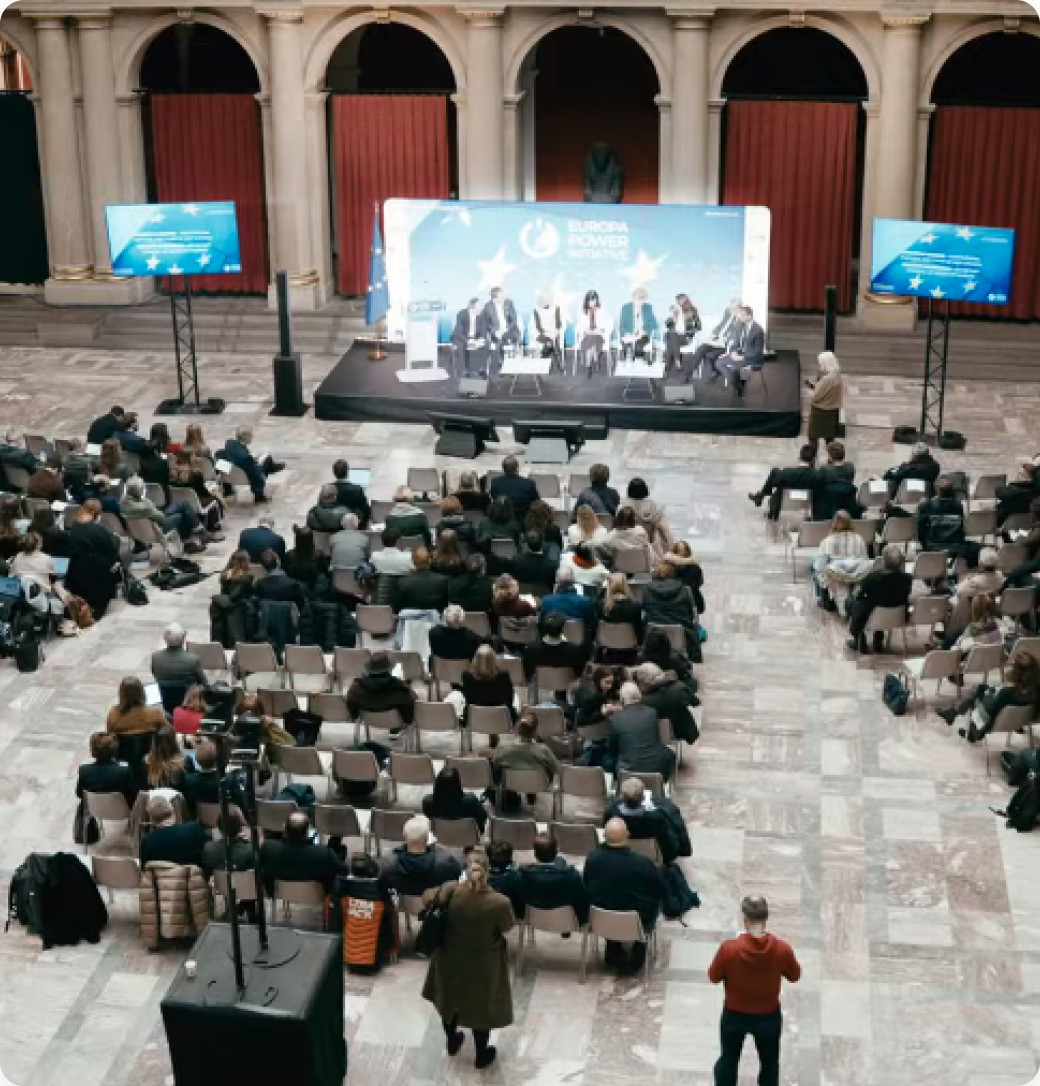
The Europa Power Conference audience includes political leaders, business executives, researchers, artists, young activists and citizens. Each comes to the event with their own language and their own ways of working. To give all these profiles equal access, information and registration had to be available in both French and English, with the same level of clarity.
Structuring a multi-session programme
The programme combined plenary sessions, thematic sessions on climate, culture, democracy, the economy and science, and networking moments, from the initiative lunch to the cocktail reception and dinner, through to the closing ceremony. Plenary sessions drew more than 200 participants, while thematic workshops brought together 35 to 50 people to encourage in-depth discussion.
Guiding every guest through to completed registration
Attending the conference required an invitation, followed by a registration form. Between receiving the invitation and confirming their registration, every step mattered to turn a guest’s interest into actual attendance. The organisers wanted to support each participant with clear confirmations and well-timed reminders, right up to the day of the event.
Running everything independently
The EuropaNova team wanted to manage invitations, registrations and follow-ups themselves, keeping control over every stage of the process. They needed an easy-to-use tool that could support a 13-session programme and a bilingual community right up to the opening of the conference.
From invitation to tailored schedule: how Wisembly powered the Europa Power Conference
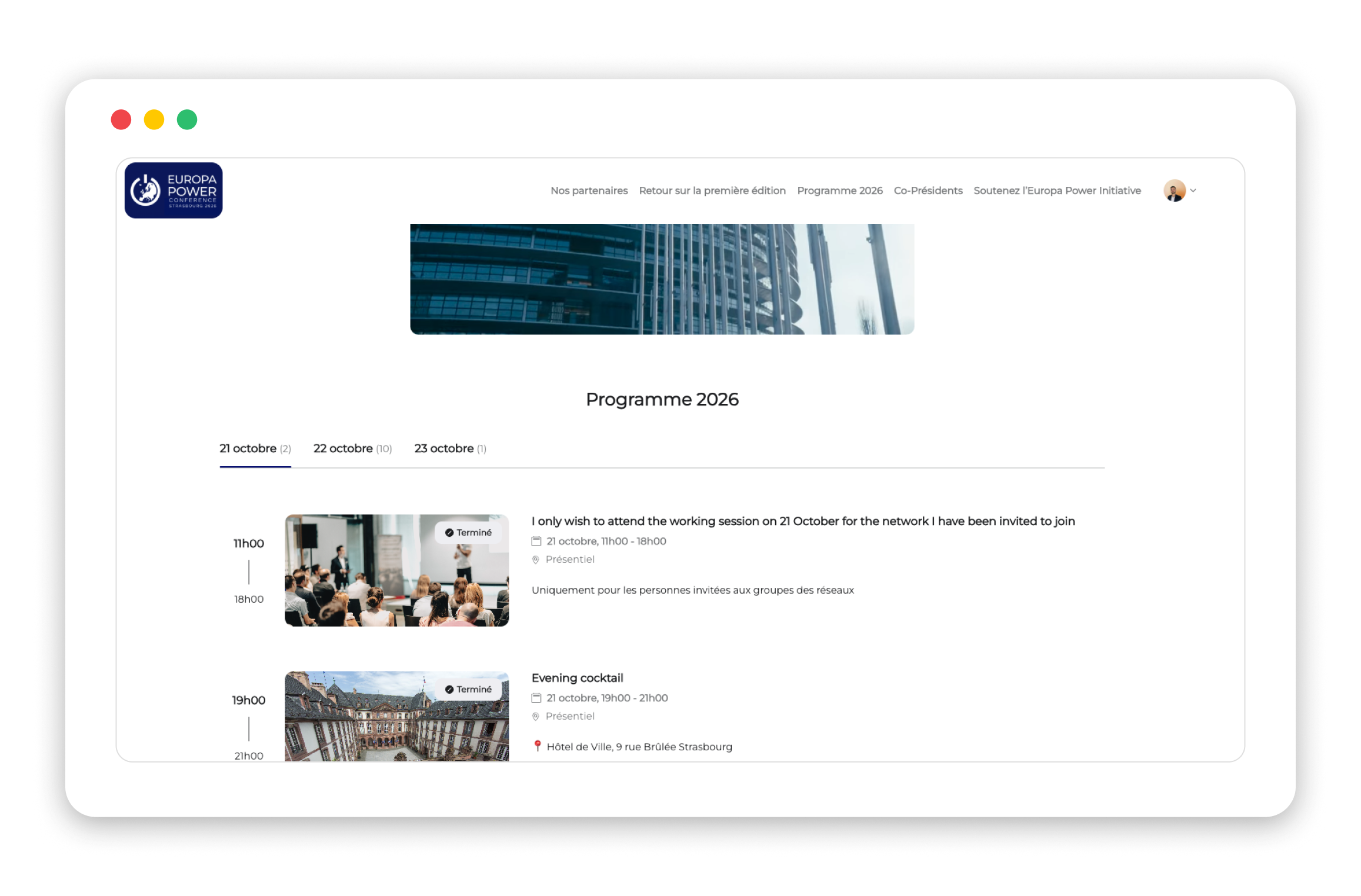
For this three-day international conference, Wisembly brought the event page, invitations, registration form and participant tracking together in one place. The EuropaNova team set up and managed everything themselves, from sending the first invitations to the opening of the conference. Here is how Wisembly addressed each of the four challenges.
3. Participant experience
Building a European journey, from the plenary hall to the European Parliament
Simple registration, in French or English
For a political science researcher, a regional elected official or a student active in a European network, registration was their first contact with the conference. In just a few minutes, everyone could view the programme in their own language, select their sessions and receive confirmation of their registration. This first step, open to every profile, already reflected the spirit of openness EuropaNova was aiming for.
From major plenaries to thematic working groups
Each participant followed a schedule that reflected their interests. The plenary sessions, which drew more than 200 participants, offered a big-picture view of the issues surrounding European power. The thematic sessions, with 35 to 50 participants each, provided a space for direct dialogue between leaders, experts and citizens on topics such as climate, culture, democracy, the economy and science.
Three packed days, closing at the European Parliament
Beyond the debates, the conference offered memorable networking moments, from the initiative lunch to the cocktail reception and the dinner held at the headquarters of the Grand Est Region. The closing ceremony at the European Parliament gave the three days strong symbolic weight, in keeping with the theme “The courage to act and to champion Europe”. For participants, these highlights extended the conversations from the sessions and strengthened their sense of belonging to a European community on the move.
4. Partnership and collaboration
A first edition on Wisembly for a conference set to become an annual event
The Europa Power Conference is set to take place every year in Strasbourg. For this first collaboration, Wisembly provided EuropaNova with a registration and communications foundation that can be reused from one edition to the next. The bilingual page, multi-session form and invitation sequences now provide a solid base for the initiative’s future conferences.
Led by Guillaume Klossa, President of EuropaNova, the initiative reached its second edition in less than a year. Managing registrations independently supported this growth, giving the organising team full freedom to foster dialogue between European institutions, civil society and younger generations. A successful first edition that lays the foundations for a long-term collaboration.
Frequently asked questions


