How to Plan an Internal Event That Actually Engages Your Employees
A well-designed company event is one of the most powerful tools you have for bringing a team together, aligning an organization, and giving everyday work more meaning. According to Gallup, companies with engaged employees see 23% higher productivity. And when an internal event lands well, it’s one of the rare moments where an entire organization breathes together.
Still, turning that moment into something your employees genuinely look forward to takes real planning, long before the day itself. So the question isn’t “should we run an internal event?” It’s “how do we make it one people actually remember?”
👉 Here’s how.
1. Nail down your goal before you think about format
The number one mistake internal event planners make: thinking about the venue before thinking about the why.
Before you book a space, before you choose between in-person and hybrid, before you even set a date, ask yourself one simple question: what should employees be feeling as they head home that evening? Inspired? Aligned? Recognized? Rallied around a project?
The answer to that question shapes everything else: the format, the agenda, the tone, the speakers.
The 3 core goals of an internal event:
- Build connection: strengthen belonging, celebrate shared wins, create ties between teams that don’t normally cross paths
- Inform: share strategy, results, and the year’s direction, and make sure everyone leaves with the same information
- Mobilize: launch a new project, support a change, get teams on board with a new direction
These goals aren’t mutually exclusive. A good internal event can hit two or three at once. But it needs one clear priority, the one that drives every planning decision. An event with a clear purpose is one people remember.
2. Pick the right format for your audience
Once you’ve nailed down your goal, the next question is format. And there’s no one-size-fits-all answer here, only your reality on the ground.
In-person: when it’s possible, it’s usually your best bet
Nothing replaces being in the same room at the same moment, sharing the same energy. In-person events naturally create what digital can’t: hallway conversations, unplanned encounters, the collective read of a room reacting to big news. It’s the ideal format for the moments that matter most: an annual kickoff, celebrating results, a major strategic announcement. If your teams are concentrated on one or two sites, don’t overcomplicate things.
Hybrid: when part of your team is remote
Hybrid is often just the reality of modern organizations: some people on-site, others working remotely, sometimes colleagues in different cities altogether. The real challenge with hybrid is making sure remote attendees get just as rich an experience as the people in the room.
Multi-site: when a single in-person gathering isn’t possible
The golden rule: design the event for remote attendees first. If it works smoothly for them, it’ll work for everyone.
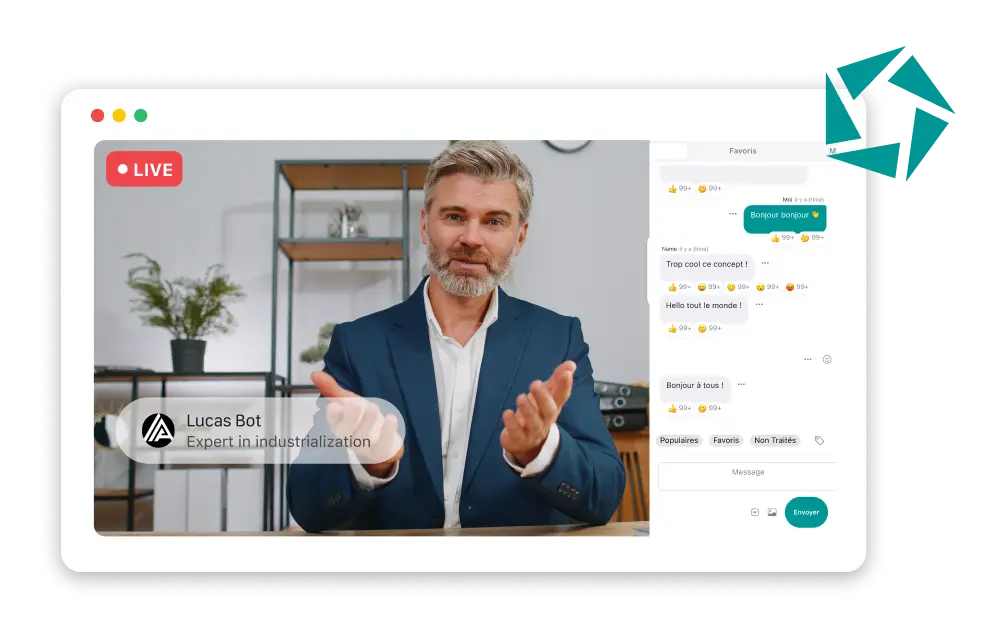
That means the right event platform, solid technical production, and hosts who make a point of bringing both audiences into every key moment.
Running a hybrid event this year? See how Wisembly handles both audiences at once.
Multi-site: when a single in-person gathering isn’t possible
Multiple offices, multiple countries, multiple time zones. Multi-site is the answer when getting everyone in one place isn’t realistic, logistically or financially.
The secret to a successful multi-site event: build strong synchronized moments (the CEO keynote, a company-wide announcement, a live quiz) alongside local moments where each site experiences the event its own way, with its own speakers, its own activities, its own lunch.
3. Build an agenda that holds people’s attention
An internal event agenda isn’t a list of presentations. It’s an architecture of attention.
The 20-minute rule
Past 20 minutes without any interaction, your audience’s attention naturally starts to drift. That’s simply how human focus works. Break your agenda into short blocks. Alternate formats: a leadership address, then an interactive moment, then a story from the field, then a break. Pacing is your best friend here.
Balance keynote moments with time to engage
The best internal events are conversations, not monologues. Set aside time for questions, reactions, and peer-to-peer exchange. A live poll on a strategic decision. An open Q&A with the leadership team. A small-group workshop on a topic that matters to everyone.
These participatory moments are usually the ones employees remember best.
Polls, Q&A, word clouds: see how these tools plug natively into Wisembly.
Balancing leadership airtime with employee voices
Make room for people on the ground to speak. Employees sharing a project, a win, a lesson learned. Teams presenting their work to the wider organization. It’s both more engaging and more unifying than a run of leadership slides.
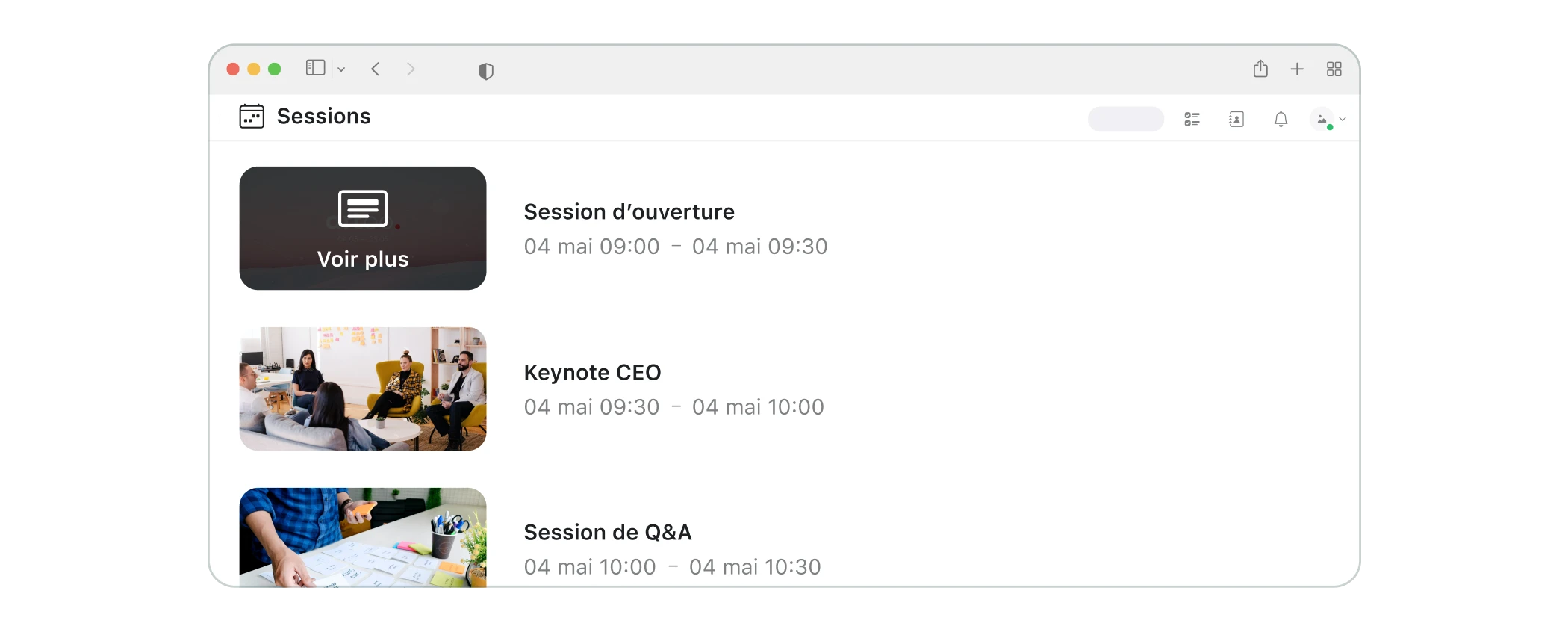
A structured seminar agenda spanning multiple sessions.
4. Engage participants before the big day
An internal event doesn’t start the morning of. It starts two weeks earlier.
The event page and registration form
Even for an internal event, a dedicated event page changes everything. It builds anticipation, centralizes practical details, and gives the event an official feel that sets it apart from Monday’s usual Teams meeting.
A registration form, even for an event where attendance is mandatory, lets you collect useful information: dietary preferences, questions to submit to leadership, workshop picks. And it makes attendees feel like active participants, not just people who got a calendar invite.
Your internal event deserves a page that matches its ambition. Build yours in under 30 minutes.
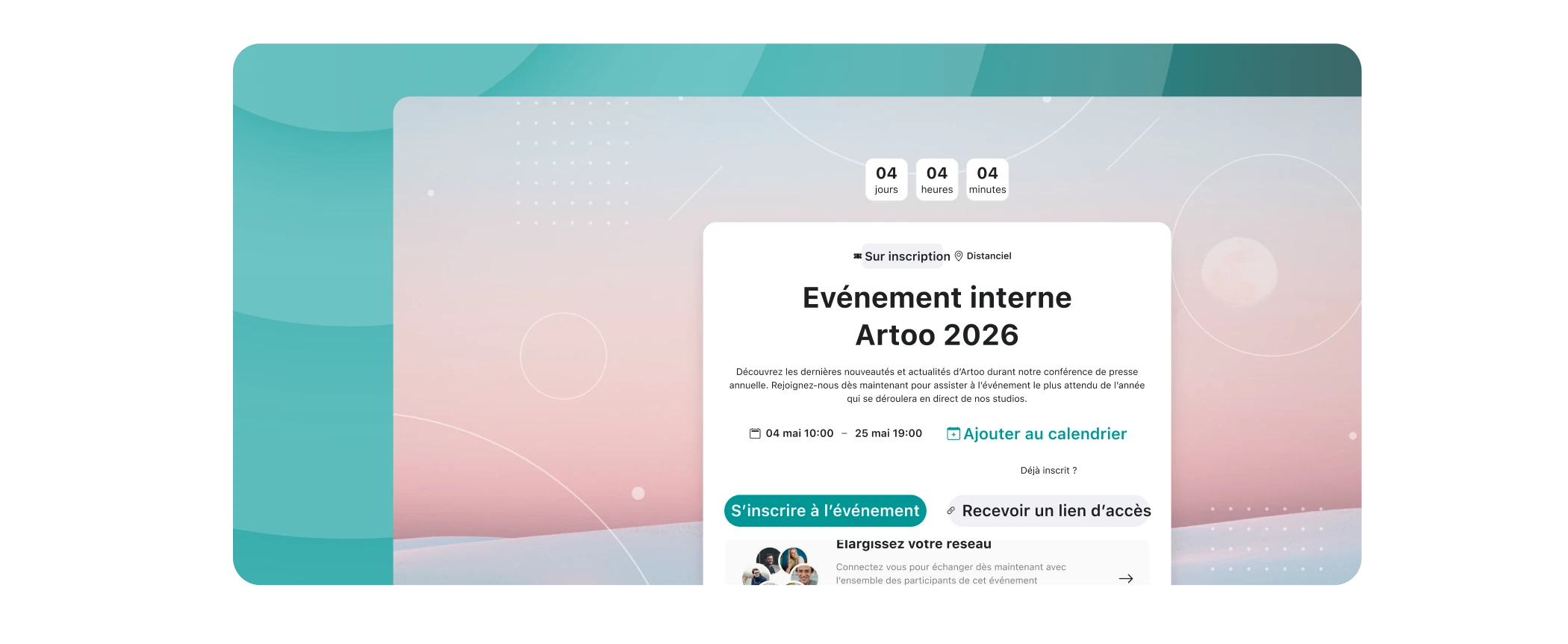
An event page built for an internal company event.
Getting your communication cadence right
- 2 weeks out: announce the event, share a save-the-date, tease early agenda details
- 1 week out: full agenda, practical information, a teaser of the key moments
- 1 day out: a logistics reminder, some anticipation-building, maybe a question to think about beforehand
Three well-crafted emails beat a stream of notifications nobody reads.
Building anticipation
A teaser video from the CEO. A poll asking “what topic do you want us to cover?” A mystery announcement about a surprise speaker. These small touches spark curiosity and turn an event into something people are actually looking forward to.
5. Run the live event to maximize participation
On the day, your goal is to keep every attendee, whether in the room or remote, actively engaged and paying attention.
The interactive tools you can’t skip
The right event software lets you build in interactive tools natively: real-time polls, audience questions, word clouds, quizzes. These features are what turns spectators into active participants.
A few concrete examples:
- An opening poll to gauge the room’s mood (“How are you feeling about the year ahead?”)
- An open Q&A during or after leadership talks
- A live quiz testing knowledge of company values or goals
- A word cloud capturing, in real time, the words that sum up how teams are feeling
These features are all native to Wisembly. See them in action.
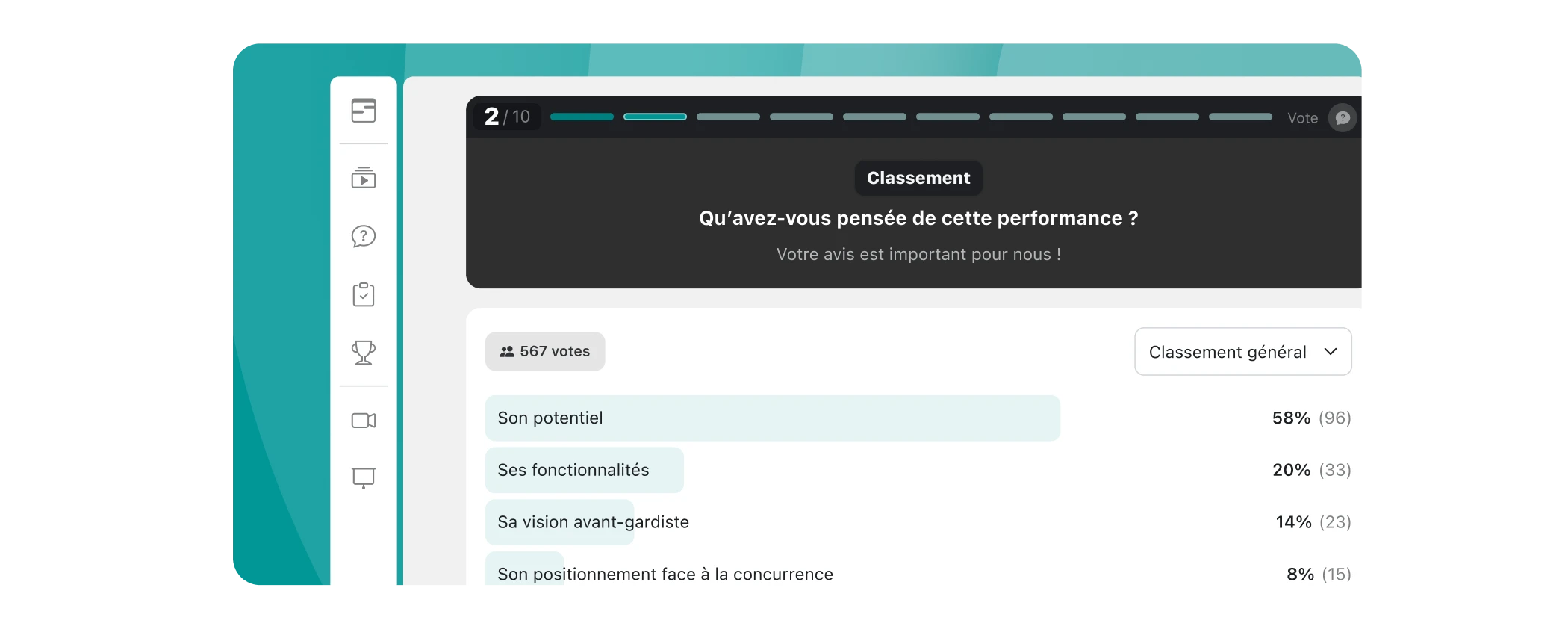
A multiple-choice quiz shown to attendees during a company event.
Managing remote questions smoothly
In a hybrid format, handling questions is usually the piece that needs the most attention. The fix: a dedicated moderator for remote attendees, filtering questions, rephrasing them, and weaving them naturally into the flow of the event. That way both audiences experience the same moment, at the same pace.
6. Don’t drop the ball after the event
A successful internal event doesn’t end when people walk out of the room.
The replay: available to everyone, right away
Some employees couldn’t make it. Others want to rewatch a key moment. The replay is a natural extension of the event, as long as it’s available quickly (ideally within 24 hours) and easy to find on the event platform.
The satisfaction survey
Sent within 48 hours of the event, a short survey (5 to 7 questions max) gives you valuable data to improve your next edition. Overall satisfaction, favorite moments, suggestions: this is the raw material for your next great event.
Communicating next steps
Within 48 hours, send a recap: the key decisions announced, the commitments made, what happens next. This turns a one-off moment into a catalyst for lasting change.
Measuring the ROI of an internal event
The ROI of an internal event comes down to:
- Attendance and completion rate (how many stayed until the end?)
- Satisfaction score (internal NPS)
- Engagement with shared content (replay, resources)
- How employee sentiment shifts in the weeks that follow
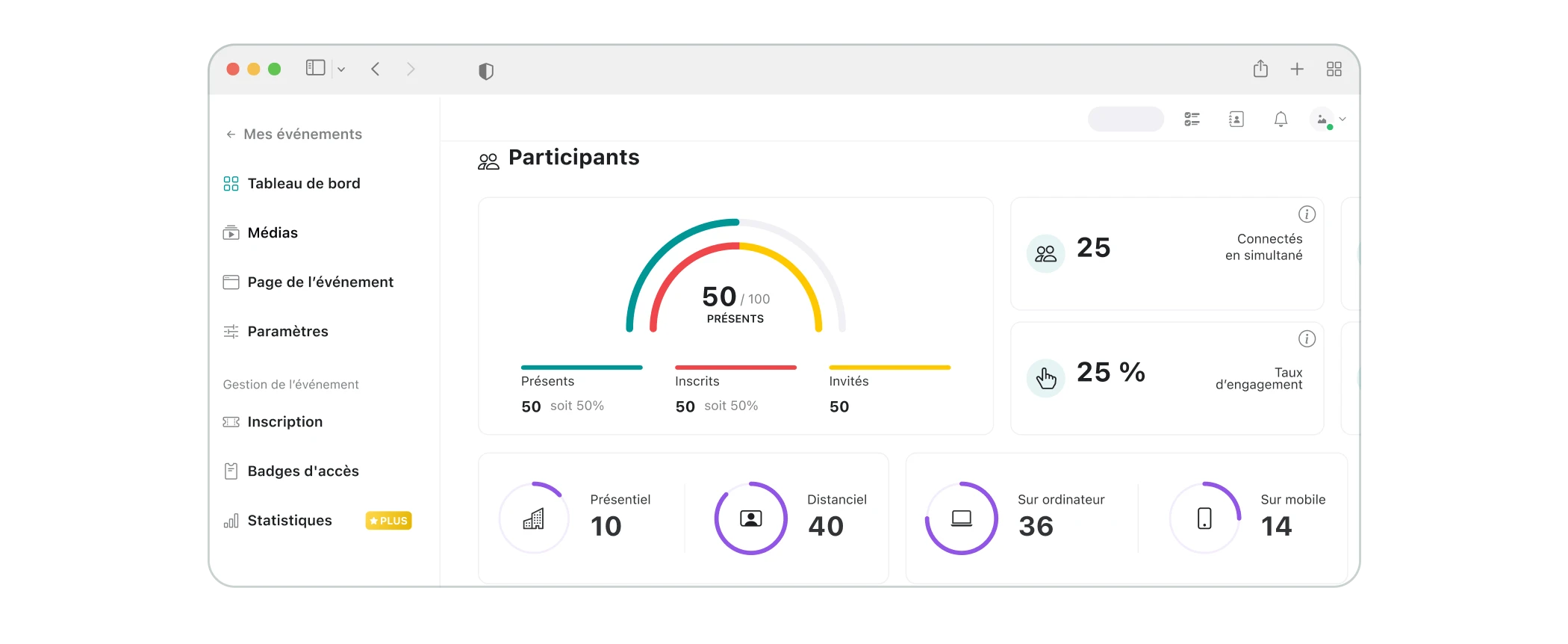
A Wisembly event analytics dashboard.
Choosing the right platform for your internal events
An engaging internal event isn’t a matter of budget. It’s a matter of design.
A clear goal. A format that fits your reality. An agenda that respects your employees’ attention. Interactive tools that give everyone a voice. And follow-up that turns a single moment into ongoing momentum.
That’s exactly what Wisembly makes possible, from the registration page all the way to the replay, with live polls and post-event analytics in between.
Planning your next internal event? Request a demo and our team will show you how Wisembly adapts to your format and your goals.